
The recently deceased fashion designer Klaus Lagerfeld famously enriched the German language with some wicked bon mots. In addition to the famous verdict of those who wear sweatpants (“…lost control over his life”), he also said the beautiful phrase: “I suffer from an overdose of myself.” Well, from his point of view, that was probably definitely better than suffering from obesity. Lagerfeld, in any case, always defended the fashion world’s obsession with skinniness (“Obesity is much more dangerous”) and stated that in a milieu that is all about beauty, no one wants to see round women.
Christian Peschke would probably have strongly disagreed. The painter and sculptor, who died in 2017, repeatedly created female bodies of baroque fullness during his long artistic career. While these bodies often describe sweeping curves, they are also of a graceful beauty and elegance because they almost seem to float against all laws of gravity.
Peschke, who is in the tradition of Georges Braques and Pablo Picasso and also unfolded in the Surrealist world of forms, “celebrates the female body in his work and thus pays homage to everything feminine”
as Barbara and Holger Weinstock of Galerie Kersten explain.
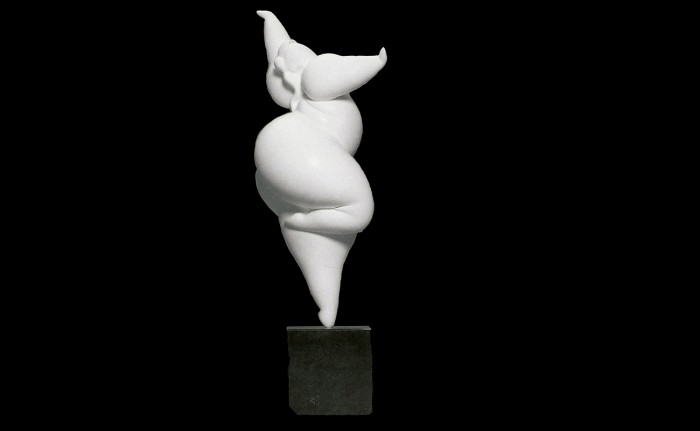
The Brunnthal gallery’s new exhibition is devoted to the work of this important artist of classical modernism, who was a friend of Salvador Dalí, Ernst Fuchs and the controversial Arno Breker, among others. Peschke’s paintings and sculptures will be on view there from this Friday through April 27. Born in Bad Säckingen in 1946, Peschke was an artist who decided against abstraction and for the representation of the representational in his art. After training at the State Academy of Fine Arts in Stuttgart, he settled as a freelance artist in Spain in 1982, where his first characteristic sculptures were created.
Christian Peschke has been represented at many exhibitions at home and abroad since the mid-nineties. For Rainier III, Prince of Monaco, he created the larger-than-life statue of a dancer and created the statuette for the George Tabori Prize for Theater and Dance, which is awarded annually in Berlin. In his sculptural works, he can certainly be seen as a European counterpart to Colombian artist Fernando Botero.
Peschke is regarded as one who, with his penchant for round, voluptuous forms, makes visible the concept of harmony in the female body, expressing – as in his color language – a love of sensuality. With his “repertoire of shapes of circles, ovals and spheres,” he refers to the “perfection of the human body,” Weinstock says, and thus “pleasantly contradicts the postulate of advertising for a slim and perfect body.” A convincing rejection of Lagerfeld’s penchant for hunger pains.
Weinstock about the Art from Christian Peschke, 2019
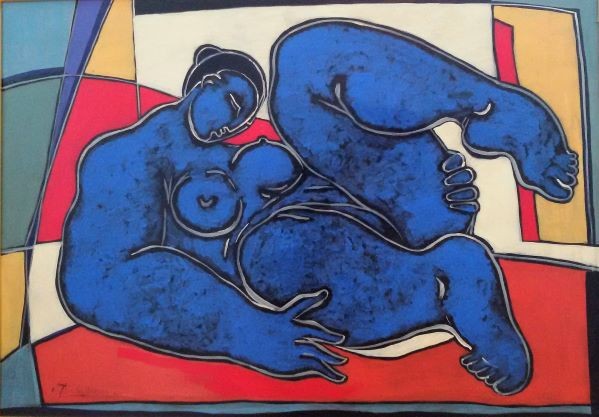
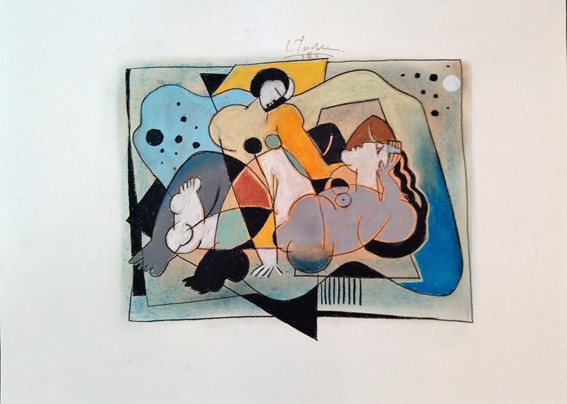
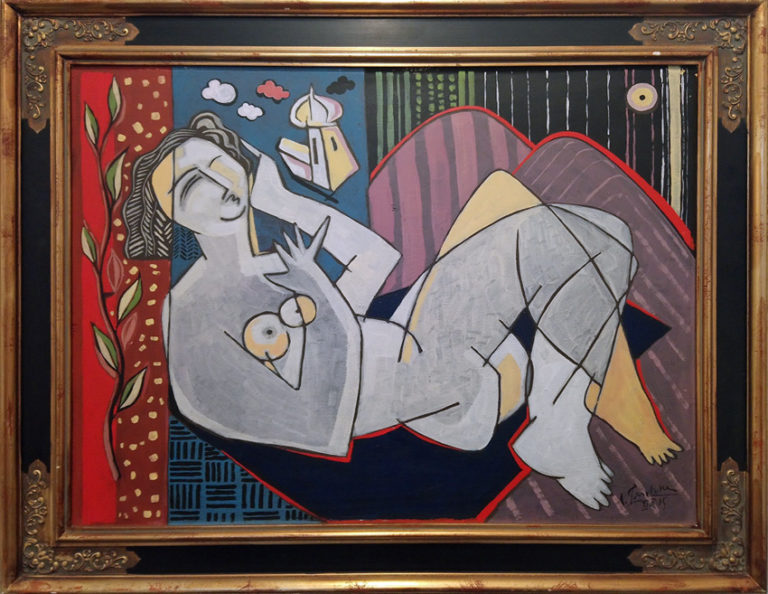
The exhibition at Galerie Kersten, Brunnthal, Otterloher Straße 6, Germany
Runs from Friday, March 22, to Saturday, April 27
For further details, please visit the gallery website.